


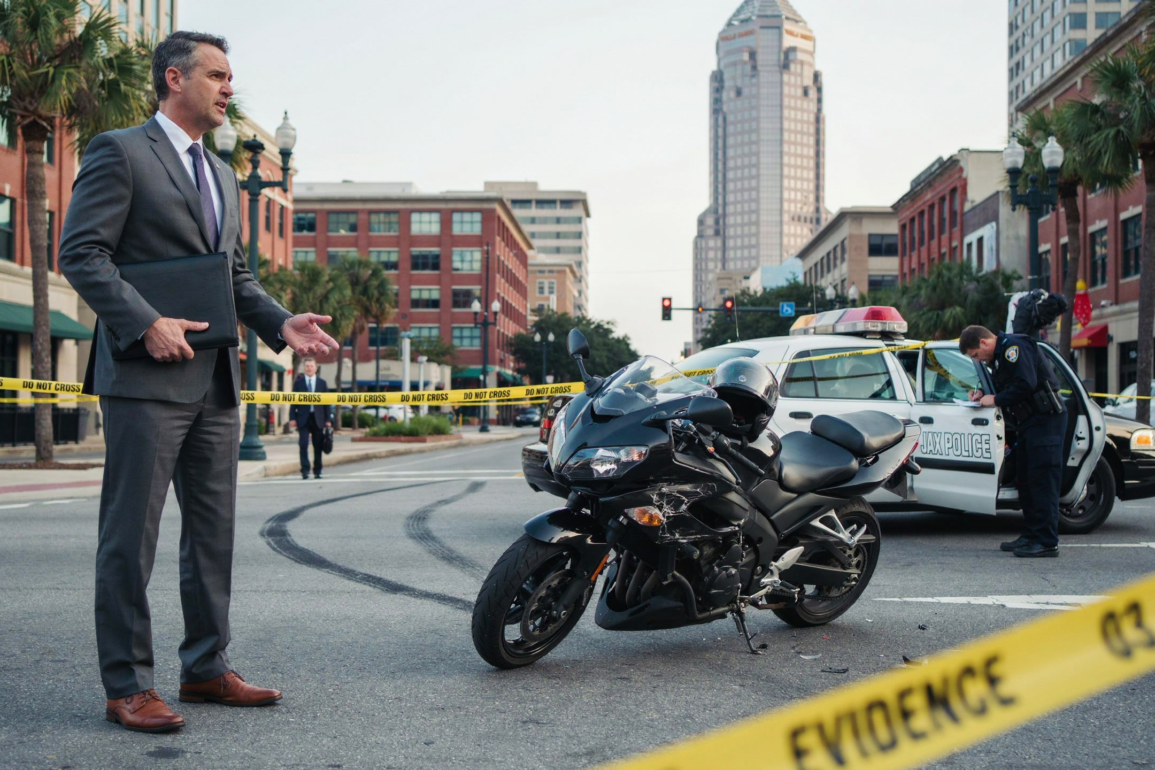
Florida’s comparative negligence law can reduce or bar compensation after a Jacksonville motorcycle crash. A rider found 50% or less at fault may recover damages reduced by that share; a rider more than 50% responsible generally cannot recover under the rule. Insurers may review crash reports, video, witness accounts, vehicle damage, and other evidence, but their assessment is not a court ruling. The Jacksonville Motorcycle Accident Lawyer team at Law Offices of Anidjar and Levine can help explain how a rider’s conduct, helmet issues, and other parties may affect responsibility and the claim’s potential value.
Main Takeaways
- Florida bars recovery if a claimant is more than 50% at fault; claimants at 50% or less may recover reduced damages.
- Your compensation is reduced by your share of fault; for example, 20% fault reduces proven damages by 20%.
- Evidence such as crash reports, video, witness accounts, vehicle damage, and medical records can help establish or challenge fault.
- A rider’s conduct may affect fault, but a citation or helmet nonuse does not automatically establish crash responsibility.
- Preserve records, seek medical care, and review settlement terms carefully; an insurer’s fault assessment is not a court ruling.
How Does Fault Affect a Jacksonville Motorcycle Claim?
In a Jacksonville motorcycle accident claim, fault can affect both whether an injured person recovers damages and how much compensation is available. Establishing how the crash occurred helps identify each party’s responsibility and connect negligent conduct to the rider’s injuries. Relevant evidence may include the police report, witness accounts, photographs, traffic-camera footage, and opinions from accident reconstruction professionals.
A careful fault assessment also helps determine which losses may be claimed. Depending on the evidence and applicable law, recoverable damages may include medical expenses, lost income, reduced future earning capacity, property damage, and pain and suffering. These losses can extend beyond immediate treatment, particularly when injuries require rehabilitation or affect a person’s ability to work and serve family or community.
Because insurers may dispute responsibility or minimize injury-related losses, organized documentation and a clear account of the crash can matter. A thorough evaluation helps ensure the claim reflects the collision’s consequences and supports a fair, evidence-based resolution for the injured rider.
What Does Florida’s 51% Rule Mean for You?
Florida’s modified comparative negligence rule bars recovery if an injured motorcyclist is found more than 50% at fault. If the motorcyclist is found 50% at fault or less, they may recover damages, reduced by their share of responsibility. Understanding how fault is assigned can consequently determine whether compensation is available and how much may be recovered.
The 51% Threshold
Under Florida’s modified comparative negligence rule, a motorcycle accident claimant may recover damages only if their share of fault is 50% or less. At 51%, recovery is barred. This statutory threshold makes fault apportionment a decisive issue in a Jacksonville claim.
Evidence may help establish each party’s responsibility, including:
- Police reports documenting the collision and scene.
- Witness accounts describing actions before impact.
- Photographs showing road conditions and vehicle damage.
- Medical records connecting injuries to the crash.
- Expert analysis addressing visibility, speed, or vehicle movement.
These materials can clarify how the crash occurred and support a fair assessment of responsibility. Because a small change in the assigned percentage can determine eligibility to recover, a claimant should preserve evidence promptly and seek informed legal guidance. Careful preparation helps protect the claimant’s opportunity to pursue accountability while serving the needs of those affected by the collision.
How Fault Affects Compensation
When a motorcyclist is 50% or less at fault, Florida law reduces compensation by that percentage; for example, a claimant found 20% responsible may recover 80% of proven damages. At 51% or more, Florida’s modified comparative negligence rule bars recovery. The reduction applies to recoverable losses, including medical expenses, lost income, pain, and suffering.
| Fault share | Recoverable share | Example on $100,000 |
|---|---|---|
| 0% | 100% | $100,000 |
| 20% | 80% | $80,000 |
| 50% | 50% | $50,000 |
Economic damages document financial harm; noneconomic damages address personal losses. Accurate evidence can help guarantee fault is fairly allocated, protecting an injured person’s ability to obtain support and continue meeting family and community responsibilities.
How Do Insurers Assign Fault After a Crash?
After a Jacksonville motorcycle crash, insurers assess fault by comparing the available evidence with each party’s actions and applicable traffic laws. An Insurance investigation may include reviewing:
- Police reports and citations, which document the scene and initial observations.
- Photographs, video, and vehicle damage, which can help establish positions and impact.
- Witness statements, which may clarify how the collision unfolded.
- Medical records, which connect injuries to the crash and inform claim evaluation.
- Traffic signals, road conditions, and relevant laws, which provide context for each person’s conduct.
Using this evidence, an adjuster conducts a liability assessment and may assign each party a percentage of responsibility. That conclusion is an insurer’s claim position, not a court ruling, and it may be challenged when evidence is incomplete or interpreted differently. A clear, organized record can help an injured rider present the facts and seek a fair evaluation. Because insurers protect their financial interests, independent legal review may help make certain the investigation accounts for the rider’s evidence and applicable Florida law.
What Could Make You Partly at Fault?
A motorcyclist may be assigned a share of fault for speeding or riding unsafely if that conduct contributed to the crash. Failing to obey traffic laws may also affect how responsibility is apportioned. The specific facts matter, and partial fault does not automatically bar recovery under Florida’s comparative negligence rules.
Speeding or Unsafe Riding
Speeding or unsafe riding can reduce a motorcyclist’s compensation if it contributed to the crash. Under Florida’s comparative negligence law, a court may assign the rider a share of responsibility based on the evidence. A percentage of fault can reduce recoverable damages, so careful investigation matters.
Potentially relevant conduct includes:
- Traveling too fast for traffic or visibility.
- Accelerating beyond a safe speed for a curve.
- Riding aggressively between vehicles.
- Failing to adjust speed for the road surface.
- Continuing at an unsafe pace despite weather conditions.
These circumstances do not automatically establish fault. The other party’s actions, crash mechanics, and available records must also be considered. A fair assessment can protect an injured rider’s claim and help guarantee that any responsibility assigned reflects the evidence, not assumptions about motorcyclists.
Failure to Follow Traffic Laws
When a motorcyclist violates a traffic law, that conduct may support a finding of partial fault only if the evidence shows it contributed to the crash. Examples include failing to yield, running a red light, or making an illegal turn. A citation may be relevant, but it does not automatically establish responsibility for the collision. The other driver’s conduct must also be examined, including distracted driving, unsafe lane changes, or Commercial vehicle violations. Under Florida’s comparative negligence rules, fault is allocated based on the evidence, and a rider’s share may reduce recoverable damages. A careful investigation can clarify whether a traffic violation actually caused or worsened the crash. That distinction matters when insurers seek to shift blame, and it helps guarantee an injured rider’s claim reflects each party’s conduct.
How Does Your Fault Share Change Compensation?
Under Florida’s modified comparative negligence rule, a motorcycle accident claimant’s compensation is reduced by the claimant’s percentage of fault; if that share exceeds 50%, the claimant generally cannot recover damages.
For example, a claimant found 20% responsible may recover 80% of otherwise recoverable damages. A fault share of exactly 50% does not, by itself, bar recovery, though it reduces the award by half. This calculation can affect compensation for:
- Medical treatment and rehabilitation
- Lost wage calculations and reduced earning capacity
- Future care costs and related support
- Motorcycle repair or replacement
- Pain, suffering, and other legally recognized losses
A fair fault allocation matters because an inaccurate percentage can substantially diminish an injured person’s resources for recovery and family responsibilities. The claimant’s recoverable amount is determined after damages are assessed and the applicable fault share is applied. Florida’s threshold makes the distinction especially important: a finding above 50% can eliminate recovery, while a finding at or below that limit permits damages reduced proportionally.
What Evidence Can Challenge a Fault Finding?
A fault finding can be challenged with evidence that clarifies how the collision occurred and whether the rider’s conduct contributed to it. Traffic camera footage, nearby business video, and photographs may show vehicle positions, traffic signals, visibility, and impact locations. Independent witness statements can offer accounts from people without a stake in the outcome, helping confirm or contradict a driver’s version of events.
Physical evidence also matters. Skid marks, debris patterns, vehicle damage, and roadway conditions may support a reconstruction of speed, braking, or lane movement. Police reports, electronic data, and qualified accident-reconstruction analysis can add context, though no single source necessarily decides fault. Medical records may document injuries and timing, but should be considered alongside collision evidence.
Because Florida’s comparative negligence rules can reduce recovery based on a claimant’s share of responsibility, a careful, timely investigation can affect the outcome. Preserving recordings, identifying witnesses, and documenting the scene may help a rider present a more complete account and challenge an unsupported allocation of fault.
How Can Helmet Rules Affect Your Claim?
Evidence may clarify who caused a Jacksonville motorcycle crash, but helmet use can raise a separate question about the extent of a rider’s injuries. Florida generally requires riders under 21 to wear helmets. Riders 21 or older may ride without one if they carry qualifying medical insurance. Helmet exemptions as a result depend on age and statutory conditions, not merely personal preference.
In Florida, helmet requirements depend on a rider’s age and whether statutory insurance conditions are met.
In a claim, helmet nonuse may become relevant when the injuries involve the head or face. It does not automatically establish that the rider caused the crash or bar recovery. The insurer may argue that not wearing a helmet worsened particular injuries; the evidence must support that connection.
- Confirm the rider’s age and applicable helmet requirement.
- Document any insurance coverage relevant to an exemption.
- Preserve medical records describing injury location and severity.
- Obtain expert analysis linking helmet use to specific harm.
- Separate injury-related arguments from evidence about crash responsibility.
A careful review can help make certain any reduction reflects proven injury effects, not assumptions, while protecting the rider’s right to fair compensation.
When Can Other Drivers or Road Owners Share Fault?
When a Jacksonville motorcycle crash involves multiple contributing acts, fault may extend beyond the rider and the driver who struck the motorcycle. Another motorist may share responsibility by speeding, changing lanes unsafely, following too closely, or failing to yield. A driver who forces a rider into another vehicle or a dangerous roadway condition may also contribute to the collision.
Road owners and contractors may bear responsibility when unsafe conditions play a role. Examples include unrepaired pavement, obscured signs, inadequate lighting, or construction zone hazards that are poorly marked or maintained. Government entity liability may arise when a public agency’s negligent maintenance or warning practices contribute to a crash, subject to special notice rules, deadlines, and other legal limits.
Florida’s comparative negligence system allows fault to be allocated among responsible parties. Each party’s share can affect the compensation available, so identifying all contributing conduct matters. A careful review of the roadway, traffic, and maintenance circumstances can help clarify who may be accountable.
How Can You Protect Your Motorcycle Claim?
To protect a motorcycle claim, an injured rider should seek prompt medical care, preserve photographs and other crash-related records, and avoid giving recorded statements or accepting a settlement before understanding the claim’s full value. Careful documentation can help establish what happened, the injuries sustained, and how comparative negligence may affect recovery.
- Follow medical advice: Attend appointments and keep Medical documentation, including diagnoses, treatment plans, and bills.
- Preserve evidence: Save photographs of the scene, vehicles, road conditions, visible injuries, and damaged gear.
- Identify witnesses: Record contact details and obtain Witness statements while recollections remain fresh.
- Keep a claim file: Retain police reports, repair estimates, receipts, and communications with insurers.
- Be accurate and consistent: Describe the crash truthfully, avoid speculation, and do not post claim-related details online.
These steps can make the evidence clearer and reduce disputes about fault or damages. A complete, organized record also helps make certain that the rider’s injuries and losses are presented fairly, supporting a more informed evaluation of any settlement offer.
When Should You Get Legal Help?
Legal help may be valuable soon after a Jacksonville motorcycle crash, while evidence is available and liability is assessed. Before accepting a settlement, an injured rider should understand whether it covers ongoing treatment, lost income, and other losses. An attorney can review the offer and explain how Florida’s comparative negligence rules may affect recovery.
After an Accident
After a Jacksonville motorcycle crash, seek prompt medical care first, then carefully document injuries, expenses, and the accident scene. Medical treatment can identify injuries that are not immediately apparent, while emotional recovery may require time and support. Because Florida’s comparative negligence rules can reduce compensation based on a rider’s share of fault, preserving reliable evidence matters.
- Call 911 and report the collision.
- Photograph vehicles, road conditions, visible injuries, and relevant hazards.
- Get contact details for witnesses and the drivers involved.
- Keep medical records, receipts, and proof of missed work.
- Avoid speculating about fault; provide accurate facts to responding officers.
Legal guidance is especially useful when injuries are serious, fault is disputed, or an insurer requests a statement. A qualified attorney can assess deadlines, protect evidence, and explain how comparative fault may affect a claim, allowing injured riders to focus on recovery and responsibilities.
Before Accepting a Settlement
Before accepting an insurer’s settlement offer, a Jacksonville motorcyclist should understand whether it covers future treatment, lost income, and other damages, and how any disputed share of fault may reduce recovery under Florida law. A settlement generally ends the claim, so review the release terms carefully; signing may prevent further recovery, even if injuries worsen or expenses exceed expectations. Legal help can be valuable before negotiations conclude, particularly when fault is contested, medical needs remain uncertain, or the insurer’s valuation is unclear. An attorney can assess evidence, explain comparative negligence, identify recoverable losses, and evaluate settlement timing against the likely course of treatment. This guidance can help an injured rider make an informed decision while preserving resources needed for recovery and continued responsibilities to family, work, and community.
Florida’s comparative negligence rules can reduce a Jacksonville motorcyclist’s recovery based on their share of fault, and being found more than 50% at fault can bar compensation. Insurers may dispute fault, helmet use, and the conduct of other drivers or road owners. Preserving evidence and avoiding assumptions about responsibility can help protect a claim. The Jacksonville Motorcycle Accident Lawyer at Law Offices of Anidjar and Levine can assess the evidence, explain potential recovery, and identify deadlines.